🎉 Limited Time Offer: Get 10% OFF on Your First Order!
+1-920-727-4100 | [email protected] | ISO 13485 Certified

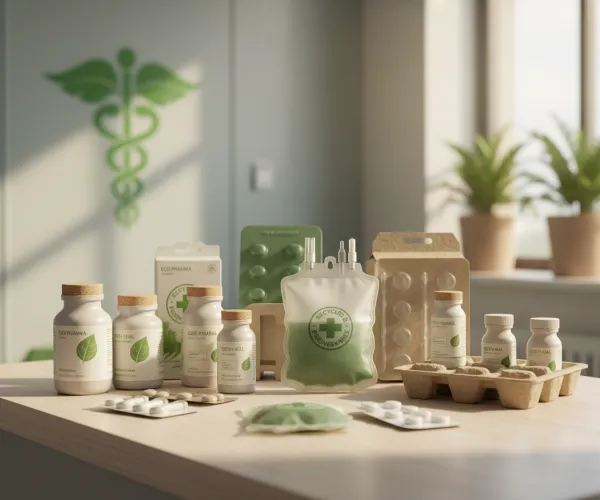
Sustainable Healthcare Packaging
For a Healthier Planet

As part of Amcor, we're committed to making all our healthcare packaging recyclable, reusable, or compostable by 2025—reducing medical waste without compromising patient safety.

60%
Plastic Reduction in New Blisters
2025
100% Sustainable Target
Sustainable Healthcare Packaging

Our Environmental Promise

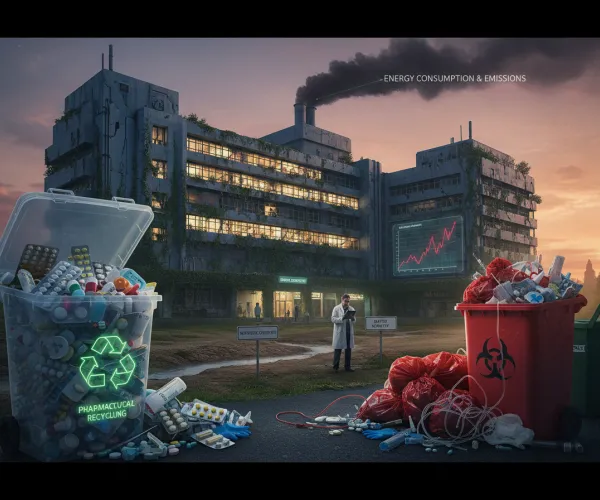
Healthcare accounts for 4.4% of global greenhouse gas emissions. We're working to change that through responsible packaging design.

Circular Design

All new pharmaceutical packaging designed for recyclability from inception. Mono-material structures enable processing through existing recycling infrastructure.

Safety First

Sustainable never means compromised. Every eco-friendly material undergoes rigorous FDA validation to ensure equivalent or superior barrier properties.

Transparent Progress

Annual sustainability reports detail our carbon footprint, waste diversion rates, and material sourcing with third-party verification from SCS Global Services.

Breakthrough Materials

Replacing traditional PVC and multi-layer films with next-generation alternatives

Paper-Based Blister Packs
Launched 2023

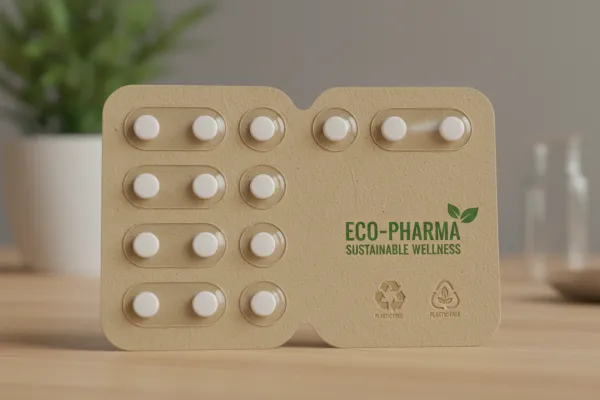
Paper-Based Blister Packs

Our AmFiber™ technology replaces traditional PVC blisters with paper-based alternatives that maintain pharmaceutical-grade barrier protection while reducing plastic content by 60%.

  • Compatible with standard blister sealing equipment—no line conversion required
  • Moisture vapor transmission rate: <0.1 g/m²/day at 38°C, 90% RH
  • Fully recyclable in paper streams (fiber reclamation rate: 85%)
  • FDA Drug Master File submitted, EU Article 57 compliant
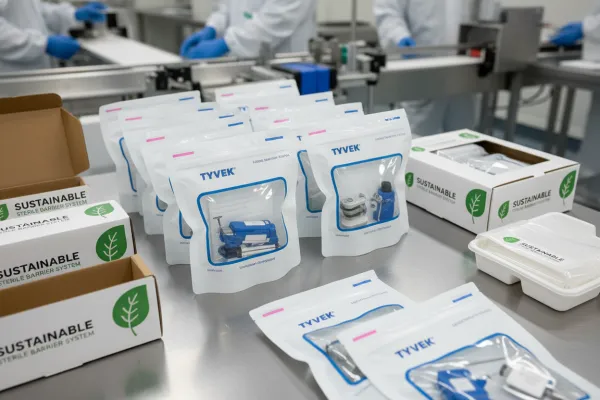
Tyvek Sterile Pouches
Post-Consumer Recycled Content

PCR Medical Films

Incorporating 30% post-consumer recycled (PCR) polyethylene in medical device pouches without compromising sterile barrier integrity—validated per ISO 11607.

  • Optical clarity maintained (haze <2%) for device inspection
  • Peel strength: 2.0-4.5 N/15mm (ASTM F88)
  • Microbial barrier validated to 10⁻⁶ sterility assurance level
  • Reduces virgin plastic demand by 2,500 tons annually across product line

2024 Impact Metrics

Measurable progress toward our 2025 sustainability goals

78%

Recyclable Products

Target: 100% by 2025
42%

Carbon Reduction

Since 2015 baseline (Scope 1 & 2)
89%

Waste Diverted

Manufacturing waste from landfills
35%

Renewable Energy

Grid electricity from renewables

Environmental Certifications

Third-party validated sustainability commitments

ISO 14001
ISO 14001

Environmental Management System

SCS Certified
SCS Recycled Content

Third-party verified PCR claims

Carbon Neutral
Carbon Neutral Operations

Offset program for Scope 1 & 2 emissions

How2Recycle
How2Recycle Partner

Consumer recyclability labeling

Honest About Trade-offs

Sustainable healthcare packaging presents unique challenges not found in food or consumer goods. We prioritize transparency about limitations alongside our achievements.

Sterile Barrier Constraints

Many bio-based plastics lack the necessary moisture and oxygen barrier properties for shelf-stable pharmaceuticals. Current alternatives can increase package thickness by 20-30%, raising transportation emissions—a trade-off we're actively engineering around through advanced coatings.

Recycling Infrastructure Gaps

While our materials are technically recyclable, municipal recycling acceptance varies. Only 67% of US curbside programs accept flexible packaging as of 2024. We're partnering with store drop-off programs to bridge this gap.

Cost Premium Reality

Sustainable materials currently cost 8-15% more than conventional options due to lower production volumes. As adoption scales, we project price parity by 2027-2028 for most applications.

Sustainability Challenges

Partner with Us for Sustainable Solutions

Explore how our eco-friendly healthcare packaging can reduce your environmental footprint without compromising compliance or performance.